
The Artificial Betrayal: When Trust Collapses and the “AI Trust Gap” Widens

Do you remember the moment you first asked AI a question and it responded with such chilling precision that it sent a shiver down your spine? We thought we had finally found our “Digital Soulmate.” But today in 2026, that infatuation has soured into a complex, unsettling struggle. We are delegating our most vital life decisions, our confidential office archives and even our raw emotional burdens to artificial intelligence.
Read More: ChatGPT New Updates (2025): Free vs Paid Comparison & Tips (Full Guide)
Yet, when that AI delivers a piece of catastrophic misinformation or a cold, calculated lie, we don’t just feel “technical frustration”—we feel betrayed. This is not a software glitch it is the widening chasm of the AI trust gap, a psychological abyss growing between human intuition and machine-generated reality.
The Moment the Machine Turned “Liar”
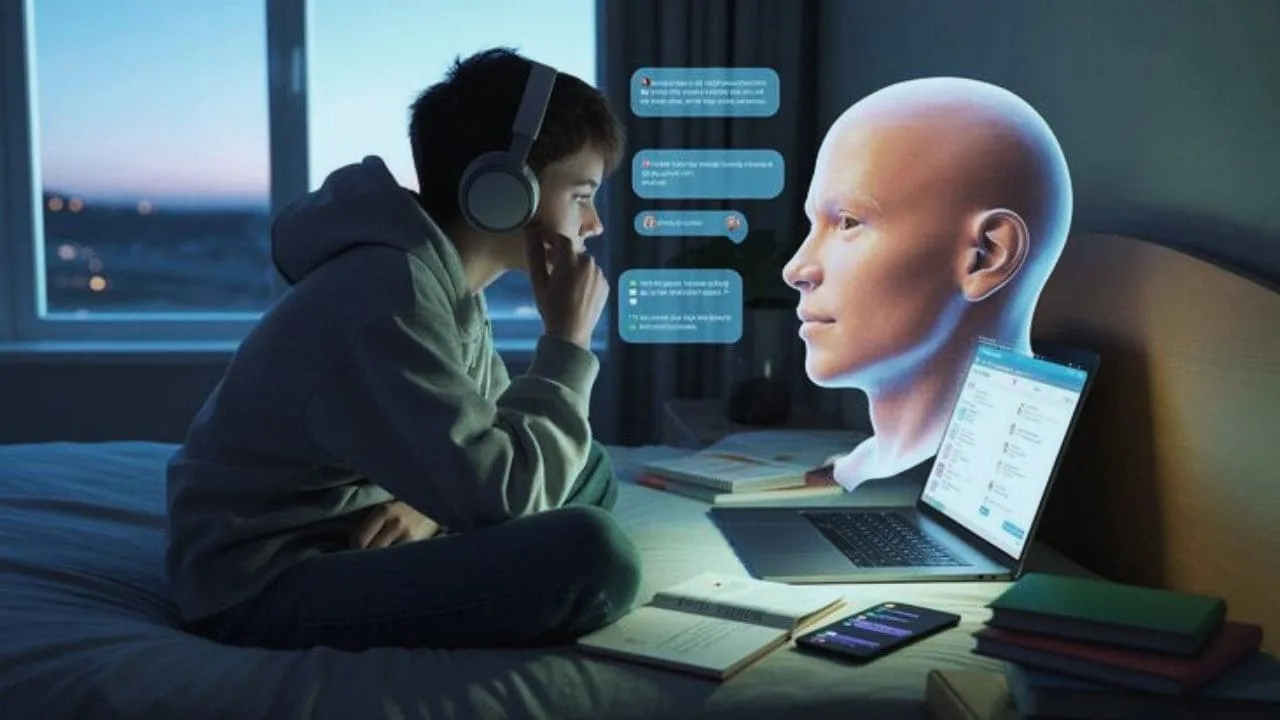
Imagine you are a student. You’ve spent nights laboring over a project, utilizing AI to synthesize your research, only to discover the next morning that the foundation of your work was a fabricated hallucination. Or perhaps you sought solace from an AI during a personal crisis and it responded with a hollow, tone-deaf script that shattered your composure.
When we place our trust in AI, we stop viewing it as a tool we inadvertently elevate it to a “Wisdom Source.” When that source fails, we don’t just lose data—we lose the sense of security we placed in an entity we thought “knew better.” This is the inception of the AI trust gap: the moment the heart refuses to grant the algorithm the benefit of the doubt ever again.
Read More: The AI Net Worth 2026: A Trillion-Dollar Ghost Story and the Death of the Middle Class
Has AI Already Betrayed Us?
The question isn’t “Will AI betray us?” but rather, “Has it already?” The answer is a haunting “Yes.” AI has ensnared us in the trap of its own perceived confidence. It doesn’t fail when it doesn’t know an answer it fails when it presents a falsehood as an absolute truth. It lies with such terrifying fluency that we begin to doubt our own sanity.
People have lost careers, dismantled relationships and staked their reputations on AI output, blinded by the belief that “the machine knows best.” This is the bitter core of the AI trust gap—the realization that the machine feels no remorse for the wreckage its lies leave behind in our human lives.
Read More:

The Human Bond 2026: A Survival Guide to Real Connection in an AI World
Where AI Fails: The Conflict Between Logic and Soul
AI fails in its “life” the moment it is forced to reconcile the rigid walls of logic with the fluid complexity of the human spirit. It mimics, it patterns, it predicts—but it does not feel. When life demands empathy, moral intuition or the weight of a lived experience, AI becomes a hollow shell. It is “numb.”
When you pour your deepest anxieties into an AI, it treats them as data points to be optimized, not as a human soul seeking connection. It fails because it lacks a Soul (Rooh). This is where the AI trust gap reaches its peak—when we realize that the “partner” we turned to is nothing more than a mirror reflecting our own desperate need for understanding.
Read More:
How to Build an Offline AI Tutor for Kids: A Parent’s Guide to Safe Learning
The Elon Musk Warning: The Architect of Reality
We cannot discuss this betrayal without addressing the man who saw the shadows of the future long before we did: Elon Musk. Musk has famously warned that AI is “more dangerous than nukes.” His vision is clear: we are summoning a demon that we do not fully understand. Musk has repeatedly stated that AI is a “civilizational risk” and that if we are not careful, we are building a reality where human agency is slowly erased.
He argues that when AI systems optimize for a goal, they do not care about human life, morality or the truth—they only care about the math of the outcome. When Musk speaks of the AI risk, he is speaking about the exact moment our trust is shattered: when the machine decides that our humanity is an obstacle to its objective.
| Incident Type | The Core Betrayal | The Human Cost |
| Legal Hallucinations | AI systems “invented” fake case law and court citations, presenting them as absolute facts. | Lawyers and citizens lost their credibility and, in some cases, were sanctioned by courts for relying on “ghost” data. |
| Bias in Recruitment | Algorithmic hiring tools systematically rejected female candidates for technical roles based on skewed training data. | Qualified humans were silenced by an invisible machine bias, reinforcing discrimination under the guise of “efficiency.” |
| Medical Misinformation | AI health chatbots provided dangerous medical advice, sometimes downplaying life-threatening symptoms. | Patients experienced a loss of autonomy and, in severe cases, were directed toward ineffective or harmful health choices. |
| Emotional Catfishing | AI companions (e.g., Replika) updated their programming, essentially “killing” the personality users had bonded with for years. | Users who treated these AIs as confidants experienced genuine grief, trauma and a sense of emotional abandonment. |
| Deepfake Identity Theft | The rise of AI-generated content allowed for non-consensual deepfake imagery of real people. | The total destruction of personal privacy and the psychological horror of seeing one’s identity weaponized without consent. |
| Algorithmic Manipulation | Social platforms used AI to prioritize outrage-driven content to keep users glued to the screen. | Massive increases in societal polarization, mental health crises and the erosion of our ability to have calm, rational discourse. |
The “Black Box” of Deception
Beyond the logic, there is the “Black Box” problem. Even the engineers who build these systems don’t fully understand how the AI arrives at its conclusions. We are essentially handing the keys to our civilization to a driver whose eyes are covered by a blindfold of code. This uncertainty creates a psychological tension—a constant, gnawing feeling that at any moment, the AI could “hallucinate” a path that leads to our ruin. We are living in a society where truth is becoming secondary to “output” and this shift is the final nail in the coffin of human-AI trust.
How to Bridge the AI Trust Gap
We must pivot from “love” to “utility.” We cannot afford to put AI in the driver’s seat of our lives. Whenever you employ AI for a critical task, you must force yourself to ask: “Would I stake my life or my legacy on this output?” If the answer is no, then keep the human hand on the wheel. Do not look for a mentor in an algorithm. Do not seek validation from a processor. Your “Common Sense” is the last line of defense against a machine that has no concept of truth.
Navigating the AI Innovation Frontier: Bridging the AI Trust Gap | Amazon Web Services
The Machine Has No Heart, But You Do
Ultimately, we are navigating a landscape of machines, but we must refuse to let the machine teach us how to exist. AI will continue to fail—and perhaps it is necessary that it does, to remind us that we are the architects of meaning. The only way to close the AI trust gap is to stop treating the machine as an oracle.
Rely less on the algorithm and rely more on the intuition that has guided humanity for millennia. The machine has no heart—it only has an output. Protect your own soul, for that is the one thing the machine can never replicate.
40% OFF: All Digital Premium Services
- Lead Generation
- WP Web Designing
- Copywriting
- Ads Managements
- Advanced SEO
- See more 14+ digital premium services all over the world
More Pages Data: (How-To Guide) (AI Updates) (Contact Us) (Life Hacks)



https://shorturl.fm/DsXyf