
How to Check Live Score: How Live Scores Actually Work
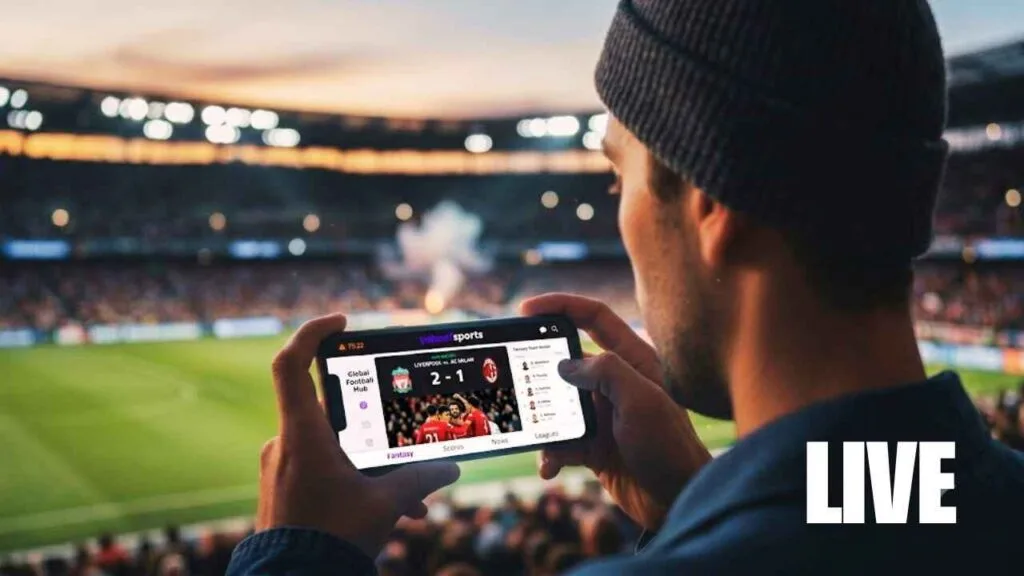
It’s the final over. The scores are level, with six balls separating the two teams and your thumb is already swiping down to refresh the app before you even realize you’ve made that decision. But have we ever stopped to think about how live scores actually work? It doesn’t matter whether you’re at home, secretly watching the match in your office break room or checking your phone under the table during a family dinner—every sports fan knows this exact feeling. Even a one-second delay before the score updates feels unbearable. And the moment that number changes your entire mood changes with it.
Yet, almost nobody stops to think about the amount of engineering behind that one simple and seemingly effortless refresh. Every live score update is powered by a highly coordinated chain of human effort, corporate infrastructure and split-second data processing that most fans never get to see. One question naturally comes to mind: How does Cricbuzz deliver scores so quickly?
One Unified Force. Complete Digital Ecosystems Built for Scalable Growth
The Real Problem: It’s Not About Your Internet Speed
Most people assume that a faster internet connection means a faster live score. That is only partially true. Your internet speed is responsible for only the final stage of the journey—delivering the data from a server to your phone. Everything that happens before that is an entirely different process, measured in milliseconds rather than megabits.
Capturing the outcome of a single ball—whether it is a boundary a wicket or a dot ball—then verifying it, processing it and distributing it to millions of screens worldwide typically happens within one to three seconds. This time window is so small that a delay at any stage can affect the entire process.
Gold Rate Pakistan Forecast 2026: Gold Over 6 Lakh? Invest or Wait?
The People Inside the Stadium Nobody Notices
This is where the real story begins. During every major international match or top-tier league fixture, there is a dedicated box inside the stadium occupied by trained professionals known as data scouts or match analysts. Their job appears simple watch every ball and immediately log its details using a specialized tablet or handheld device.
The moment the bat makes contact with the ball, the analyst is already entering the details:
- The type of delivery — yorker, bouncer, full toss
- Runs scored off that ball
- The shot played — cover drive, pull, sweep
- Whether a wicket fell and how
These devices are specifically designed for speed. A trained analyst typically takes no more than two or three seconds to log an event and achieving this level of accuracy requires years of practice—this is far from ordinary data entry. Football operates on the same principle, where goals, fouls, offside calls and possession statistics are also logged in real time by trained personnel stationed pitch-side.
How to Run Private AI Offline: Build Your Own AI Business in 2026
This ground-level data entry forms the foundation on which everything else is built.
The Data Highway Behind Every Score
LIVE SCORE of any Live match on your Smartphone’s home screen by @TechWorld786
This raw information does not travel directly to apps like Cricbuzz or ESPN. Between them lies a highly important layer known in the industry as B2B data providers. Globally two companies dominate this space Opta and Sportradar.
These companies are official partners of leagues, federations and governing bodies. Their role is to convert the raw and often messy data coming from the stadium into a clean and standardized digital feed. This process typically includes the following steps:
- Verification to identify and correct human errors
- Standardization converting the data into a uniform format that every app can read
- Distribution delivering the processed feed through data centers to licensed clients
This is the invisible highway through which almost all sports data travels—a layer that most casual fans have never even heard of despite relying on it every single day.
How to Starve Google Trackers of New Data in 2026: The Ultimate Blueprint for Digital Resurrection
What Exactly Is an API? Think of a Restaurant
This is where one of the most important aspects of technology comes into play—API. What is a Live Score API? API stands for Application Programming Interface and the easiest way to understand it is through a restaurant analogy.
Imagine you are sitting in a restaurant. You do not walk into the kitchen and cook your own meal. Instead, you place your order with a waiter. The waiter delivers your order to the chef and once the meal is ready, brings it back to your table. You never see what happens inside the kitchen—you simply receive the finished meal.
An API works in exactly the same way.
When an app like Cricbuzz or SofaScore needs the latest score it sends a request through an API to the servers of Sportradar or Opta. Those servers process the request and immediately send the data back to the app. This entire process is handled through code, with absolutely no manual human involvement. The exchange happens so quickly that it appears completely automatic to the end user, even though the system is handling millions of simultaneous requests every second in the background.
The AI Net Worth 2026: A Trillion-Dollar Ghost Story and the Death of the Middle Class
How Apps Survive Millions of Refreshes at Once
However, the process is not as simple as it sounds. Imagine a high-stakes match between two fierce rivals—there could be tens of millions of users refreshing their apps within the same few seconds. A single ordinary server would almost instantly fail under that level of traffic.
This is why major platforms rely on cloud infrastructure—not a single machine, but a distributed network of thousands of servers located across the globe. Whenever traffic suddenly spikes the system automatically brings additional servers online to absorb the increased load. This mechanism is known as load balancing and it is the reason your app remains responsive regardless of how many people are refreshing at the same time.
Platforms such as Cricbuzz, ESPN Cricinfo and SofaScore also make extensive use of caching—storing frequently requested data closer to users so that the system does not need to query the origin server for every refresh. Although it may seem like a small architectural technique, it is one of the primary reasons these apps continue to perform so seamlessly during peak traffic.
Best Vibe Coding Tools 2026 & Details: Will AI Really Replace Programming?
Why Your App Sometimes Beats the TV Broadcast
How does the score appear on the app before it appears on TV? Now let’s discuss the part that genuinely surprises most fans—latency. You may have noticed that sometimes a wicket appears on your app before it appears on television, while at other times the opposite happens. This is because the two systems follow completely different delivery paths.
Television broadcasts involve capturing a video signal transmitting it to a satellite and then processing it before delivering it to your screen. Depending on the broadcaster and region, this entire pipeline can introduce a delay of anywhere between five and forty seconds. In contrast text-based score data is an extremely lightweight payload that travels over the internet much faster than a full video stream.
That is exactly why a live score app often displays a wicket or boundary before the television broadcast catches up. A few kilobytes of text simply travel much faster than a continuous video feed. Broadcasters continue working to reduce this delay but eliminating it completely is still not technically possible.
The next time you refresh your app during a match, take a moment to think about what that single number actually represents. An analyst inside the stadium logging every ball in real time. A data center processing and standardizing that information. An API exchange taking place in the background. A global network of cloud servers handling millions of simultaneous requests. All of this comes together in less than three seconds, ensuring that no matter where you are in the world, you never miss a single moment of the game.
Have you ever searched on Google for “How to Check IPL Live Score? or How to Check Live Scores?”
40% OFF: All Digital Premium Services
- Lead Generation
- WP Web Designing
- Copywriting
- Ads Managements
- Advanced SEO
- See more 14+ digital premium services all over the world
More Pages Data: (How-To Guide) (AI Updates) (Contact Us) (Life Hacks)